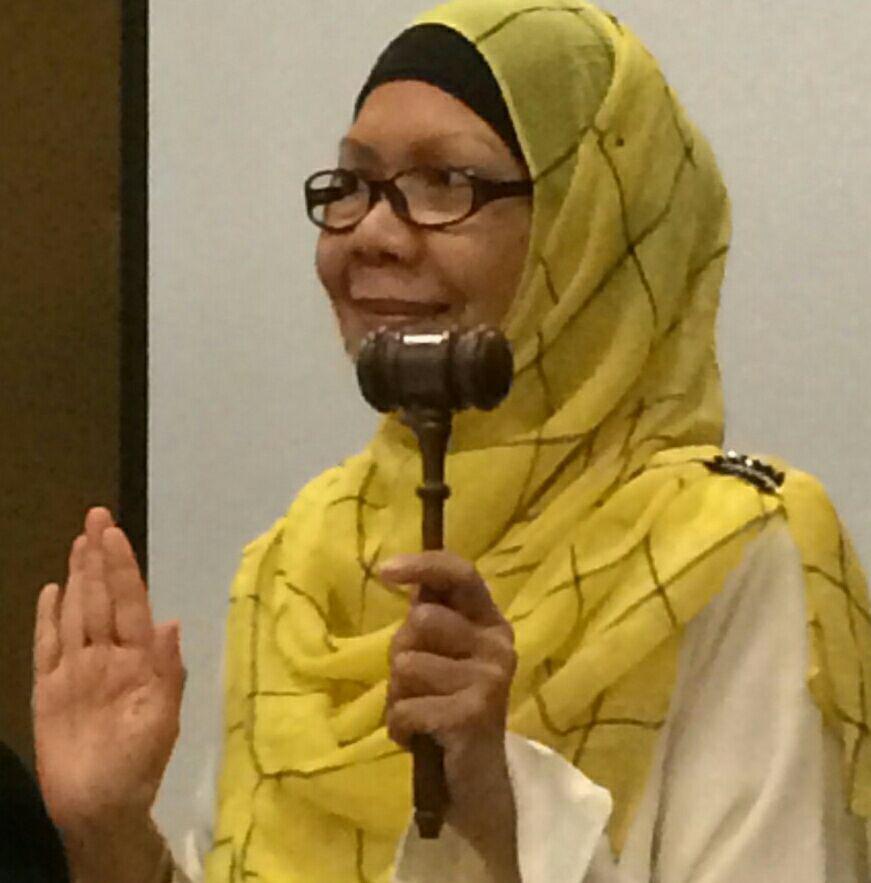
Speech No. 5 – Your Body Speaks
My Most Memorable Moments in Sports
It all started with some kid grabbing my self-made Mobile Phone and running off with it.
One day I waited for him along the village path. When I heard him coming I hid behind a large rubber tree. When he got close I jumped out and tried to kill him with my bare hands. However it was I who got pummelled to the ground. He ran off leaving me sobbing. The rain came down and good thing too. I went home and my mother did not know I was crying for the rain water. I realised early that I was never going to be Jo diMaggio or Henry Cooper.
The time came for me to enter School where the teachers saw my talent with numbers and geometry so since I could not take part in sports I helped them measure out the tracks: sort of a Clerk of the Course.
Years later in Secondary School I could only hang around the Cricket team and was asked often to be the Cricket Scorer seeing that I was good with figures. One day however, my time for fame came. One member of the school team was absent and as there was no one else around I was asked to be one of the fielders. I was asked to field at point and soon enough to my delight but to his chagrin I caught out the top player of the opposing team. I was elated with all the backslapping.
I left my school to go to Kuala Lumpur to continue my studies in the Sixth Form. During the Games festival since there were only 20 of us in the class and half were girls I made the Lower Six Rugby Team. During a confused loose scrum near the goal line I picked up the ball and ran 2 yards forward to score a try. Our Team beat the Upper Six 5-3. Again I was delirious with the back slapping.
I grew up to be an adult and still not adept at any sports.
Naturally the next sport I took up was Golf. I hacked away from Seremban to Kuala Trengganu and then back to Kuala Lumpur. One year I came near fame when I tied for top place with another player for one of the annual trophies. They decided we should re-play one week later to determine the winner. On the afternoon of the play off my opponent said something to me on the starting tee, which I took to mean that he was nervous about our game. I knew then that the trophy would be mine, and four hours later it was. Fame has come at last. To this day each time I visit the Club I would look up at that particular honour board where my name was etched and look at it with pride. I would point it out to whoever was near me whether they were interested or not.
After hacking away for 35 years I scored my first hole in one in the year 2000. Not satisfied with one I did my 2nd Hole in one year later. Not many people can say they have had a hole in one let alone 2.
While I celebrate my 70th Birthday tomorrow 15th July 2009 I still cherish those moments when I shone in 3 sports by accident.
As for the boy who ran away with my mobile phone that many years ago I do not give it much thought these days. We met some years back in the Prophet’s Mosque in Medina, Saudi Arabia. We did not recognise each other but as we were seated next to each other we shook hands and introduced each other and asked where we were from and were shocked to find out we grew up together that many years ago. I never mentioned about our fight that time. A few years back I was told he had gone on to paradise. As for me I now have the latest gadget: my new iPhone, only there is hardly anyone around to call me.
2009-07-13
2008-04-13
The kempetai came a calling in the night
1943 One night, father was trying to put youngest baby Ramli to sleep by reading to him comforting sentences from the Quran. There were shouts from outside asking him to open the door. Letting baby slip onto the mat he got up to see who it was. On opening the door we saw about a dozen Japanese soldiers asking him to hand over the weapon. What weapon he asked? This must have been 1943 and I was 4 years old and Ramli 2.
Mother went to the cupboard took something out and slung it through the window into the night. The soldiers shouted and scampered in the direction of the projectile with the help of flashlights. They picked it up and came back with it, the captain handed it back to my father. We do not want this telescope said he, we want the gun that you have in this house. Father protested he did not have a gun. Truth was he was scared: he had stolen the telescope from the abandoned British Army base along with a thick algebra book. It was all he could get in a mad frenzy by the villagers pilfering the British garrison near the air strip of Lalang Luas.
Not convinced that he had no gun the soldiers started ransacking our little hut and I was cowering in one corner scared. Finally satisfied there were no weapons the soldiers prepared to leave but not before placing hand cuffs to my father's wrists and dragging him along into the dark night. This was my cue: I started bawling and woke baby up as well and we bawled in unison. The soldiers stopped and the Captain barked some harsh words to one of his men. This soldier ran back in our direction and seeing this I cried even louder and my mother was shedding tears as well. The soldier took something out of his pocket and handed it to me. It was a 10 dollar note something I have not seen before in my existence. As if by magic I stopped crying and snatched it away from him with a sheepish grin. As soon as they have disappeared mother washed my face and i laid down to sleep with the 10 dollar note tightly held in my fist.
At first light the next day I was up and scampered to the lane in front of the hut waiting for that woman who sold cakes to come by. After a long wait she appeared and I exchanged the 10 dollar with 2 pieces of cake. I ate one and gave Ramli one. We finished it in no time. My mother did not have any, she said she was not hungry.
We waited around all day for father's return and finally towards dusk he came walking back feet sore from walking the 12 miles from the interrogation centre. He told us he was not harmed saw a few others getting the water treatment. I asked how was it that he was not harmed. he said kept reading the quran from memory and somehow that saved him.
Grandfather and uncle came over to the hut and they seemed relieved that everything was back to normal.
I cannot recall where my 2 elder brothers and sister were. I reckon there were all staying with my grandparents as mother and father did not have enough food to feed us all.
Mother went to the cupboard took something out and slung it through the window into the night. The soldiers shouted and scampered in the direction of the projectile with the help of flashlights. They picked it up and came back with it, the captain handed it back to my father. We do not want this telescope said he, we want the gun that you have in this house. Father protested he did not have a gun. Truth was he was scared: he had stolen the telescope from the abandoned British Army base along with a thick algebra book. It was all he could get in a mad frenzy by the villagers pilfering the British garrison near the air strip of Lalang Luas.
Not convinced that he had no gun the soldiers started ransacking our little hut and I was cowering in one corner scared. Finally satisfied there were no weapons the soldiers prepared to leave but not before placing hand cuffs to my father's wrists and dragging him along into the dark night. This was my cue: I started bawling and woke baby up as well and we bawled in unison. The soldiers stopped and the Captain barked some harsh words to one of his men. This soldier ran back in our direction and seeing this I cried even louder and my mother was shedding tears as well. The soldier took something out of his pocket and handed it to me. It was a 10 dollar note something I have not seen before in my existence. As if by magic I stopped crying and snatched it away from him with a sheepish grin. As soon as they have disappeared mother washed my face and i laid down to sleep with the 10 dollar note tightly held in my fist.
At first light the next day I was up and scampered to the lane in front of the hut waiting for that woman who sold cakes to come by. After a long wait she appeared and I exchanged the 10 dollar with 2 pieces of cake. I ate one and gave Ramli one. We finished it in no time. My mother did not have any, she said she was not hungry.
We waited around all day for father's return and finally towards dusk he came walking back feet sore from walking the 12 miles from the interrogation centre. He told us he was not harmed saw a few others getting the water treatment. I asked how was it that he was not harmed. he said kept reading the quran from memory and somehow that saved him.
Grandfather and uncle came over to the hut and they seemed relieved that everything was back to normal.
I cannot recall where my 2 elder brothers and sister were. I reckon there were all staying with my grandparents as mother and father did not have enough food to feed us all.
2008-04-11
Chilhood Memories
From my youngest brother Suhaimi:
Well, there are lots of our childhood memories. And one that I cherished most is when it comes to harvesting time "mengetam". At that time we were staying at Kedai Labok in that rented shophouse.

When it's mengetam time everybody decamped to the padang staying in a Dangar beside that "kubang raja". That Dangar house was built by Pak Chu Kob the man who minded our padi field. It took 3 months for the mengetam to complete. And I remember how every now and then Mek Jah woul be seized by her epileptic fit during the mengetam. At that time I was in standard 2 at Sekolah Labok. Everyday on my way to school, I have to carry a stick in order to fend off the tall padi plat, so that I don't get wet from the dew on it. During the fasting month, I remember how on my way back I fell asleep in someones kebun getah at Kg Takil, and Abah came searching for me in the evening. Life was full of fun, especially that Kubang Raja full of fish. The padi plants were taller than me at that time, and I used to play hide and seek with Raudah. At night we used to lay mats on the jerami and slept there together with Ramli and Derame. Early morning Abah would escort Ramli to Batu 23 roadside to catch the bus to Kota Bharu (Schooling in SIC), because there's a wild Bull tied by someone by the path. As for Mokhtar, he was in the army at that time. I remember how during lunch time we would always received guest at our Dangar because they enjoy having lunch at the padang al fresco. I still can't figure how Abah and Mek were able to make ends meet during those difficult times. Nevertheless we had happy life. And one thing I regret is that we have sold that Tanah Padi, someone from our family should have taken it over, because its full of memories.
Well, there are lots of our childhood memories. And one that I cherished most is when it comes to harvesting time "mengetam". At that time we were staying at Kedai Labok in that rented shophouse.

When it's mengetam time everybody decamped to the padang staying in a Dangar beside that "kubang raja". That Dangar house was built by Pak Chu Kob the man who minded our padi field. It took 3 months for the mengetam to complete. And I remember how every now and then Mek Jah woul be seized by her epileptic fit during the mengetam. At that time I was in standard 2 at Sekolah Labok. Everyday on my way to school, I have to carry a stick in order to fend off the tall padi plat, so that I don't get wet from the dew on it. During the fasting month, I remember how on my way back I fell asleep in someones kebun getah at Kg Takil, and Abah came searching for me in the evening. Life was full of fun, especially that Kubang Raja full of fish. The padi plants were taller than me at that time, and I used to play hide and seek with Raudah. At night we used to lay mats on the jerami and slept there together with Ramli and Derame. Early morning Abah would escort Ramli to Batu 23 roadside to catch the bus to Kota Bharu (Schooling in SIC), because there's a wild Bull tied by someone by the path. As for Mokhtar, he was in the army at that time. I remember how during lunch time we would always received guest at our Dangar because they enjoy having lunch at the padang al fresco. I still can't figure how Abah and Mek were able to make ends meet during those difficult times. Nevertheless we had happy life. And one thing I regret is that we have sold that Tanah Padi, someone from our family should have taken it over, because its full of memories.
2008-04-09
Masjid Labok
Kampong Labok
That Masjid Labok was where Ramli and I went one evening at dusk to sound the gong for signalling the Buka Puasa and we did not hear the the geduk from Tok Bok one mile away as our cue due to the wind blowing in the wrong direction: so that night Labokians were late in breaking their Puasa. Mek rushed out of the hut (50 metres away) onto the bullock cart track and shouted at me, "goreb doh wel, gelap doh ni katok lah geduk tu". I could have been about 9 years old which was about 1948 that's 60 years ago.
No TV nor Handphones then. No radio, no watch nor clock not even electricity. I used to dream what it would be like to have shoes. I did not have to dream long for one day on the way home from school I came across a pair of Fung Keong rubber shoes on the edge of the stream. Finders keepers losers weepers.
Fast forward 60 years:
And now it is so much different. Philip can see this message at the same time that I publish the post though he is 14,000 km away.
In honour of Labokians everywhere I adopt the word labokin as my gmail handle
That Masjid Labok was where Ramli and I went one evening at dusk to sound the gong for signalling the Buka Puasa and we did not hear the the geduk from Tok Bok one mile away as our cue due to the wind blowing in the wrong direction: so that night Labokians were late in breaking their Puasa. Mek rushed out of the hut (50 metres away) onto the bullock cart track and shouted at me, "goreb doh wel, gelap doh ni katok lah geduk tu". I could have been about 9 years old which was about 1948 that's 60 years ago.
No TV nor Handphones then. No radio, no watch nor clock not even electricity. I used to dream what it would be like to have shoes. I did not have to dream long for one day on the way home from school I came across a pair of Fung Keong rubber shoes on the edge of the stream. Finders keepers losers weepers.
Fast forward 60 years:
And now it is so much different. Philip can see this message at the same time that I publish the post though he is 14,000 km away.
In honour of Labokians everywhere I adopt the word labokin as my gmail handle
2008-03-10
we learn a lot from this election
This is from my friend Ir. Wan Yusoff
io, amy, agr, bob, rs, tsaa, bs, al
at least we learn a lot from this election:
1- we learn that the Malays have thicker skins
2- we learn that destroying any place of worship is not acceptable to all races
3- we learn that building a palace where there is no sultan is not acceptable
4- we learn that sons-in-laws are not the same as sons or daughters.
5- we learn that sleeping too much will also affect the brain
6- we learn that getting the defence lawyer to write the essay for the judge is not acceptable
7- we learn that the pictures on the banners does not create love but hatred
8- we learn that blogging is more cost-effective for political campaigns
9- we learn that nobody have any sympathy for a birthday boy
10- we learn that getting the govt servants like igp or spr on your side will reduce your popularity
11- we learn that its bad luck to play with the keris
12- we learn that its not acceptable to call people 'stupid' but its quite ok to call them 'orang utan'
13- we learn that if a little girl wants to give you flowers you jolly well should entertain her
14- we learn that if you want to win the election get yourself admitted to kamunting or sg buloh first - only one 'passport' is required for the whole family
15- we learn that if anybody wants to sell you big boxes of inks cheap cheap - don't buy.
16- we learn that not only cats have nine lives
17- we learn that you can start something but once its started you can't stop it.
18- we learn not to take the tourist bus during election day or a day before.
19- we learn that all the important files should be kept at home before election just in case somebody needs to move into your office.
wan
io, amy, agr, bob, rs, tsaa, bs, al
at least we learn a lot from this election:
1- we learn that the Malays have thicker skins
2- we learn that destroying any place of worship is not acceptable to all races
3- we learn that building a palace where there is no sultan is not acceptable
4- we learn that sons-in-laws are not the same as sons or daughters.
5- we learn that sleeping too much will also affect the brain
6- we learn that getting the defence lawyer to write the essay for the judge is not acceptable
7- we learn that the pictures on the banners does not create love but hatred
8- we learn that blogging is more cost-effective for political campaigns
9- we learn that nobody have any sympathy for a birthday boy
10- we learn that getting the govt servants like igp or spr on your side will reduce your popularity
11- we learn that its bad luck to play with the keris
12- we learn that its not acceptable to call people 'stupid' but its quite ok to call them 'orang utan'
13- we learn that if a little girl wants to give you flowers you jolly well should entertain her
14- we learn that if you want to win the election get yourself admitted to kamunting or sg buloh first - only one 'passport' is required for the whole family
15- we learn that if anybody wants to sell you big boxes of inks cheap cheap - don't buy.
16- we learn that not only cats have nine lives
17- we learn that you can start something but once its started you can't stop it.
18- we learn not to take the tourist bus during election day or a day before.
19- we learn that all the important files should be kept at home before election just in case somebody needs to move into your office.
wan
2008-03-09
Following the Election Results

This was about midnight on Election day where people gather to watch announcement of results in a coffee shop. This one was in Desa Pandan near my place.
There was a loud boo every time the BN won a seat. I am told that those people in the coffee shop were Umno election workers. The loudest boo was heard when a photo of Shahrizat was shown.
What's with these people.
This was written by a friend in response to my write up above:
IO,
What's with the mainstream media? When Al-Jazeera at 9pm stated that BN lost Penang, RTM and TV3 were still harping on BN wins elsewhere (like Sabah & Sarawak), and not even showing results coming in from Kedah, Perak and Selangor until much later. RTM1 showed "live" telecast of announcements of results by EC officials about 3 hours after the real announcements. Samy Vellu was conspicuously absent in Sg Siput during the "live" announcement.
This morning at 7:30am only one Chinese daily was available for me to read (I could read the party symbols and the figures), the mainstream papers were only on sale after 8:30am. Perhaps they had to stop the presses as the stories already printed weren't the real things!
With newbies like Gwo Burne and Nurul Izzah becoming giant-killers in BN strongholds, a wave of change is taking place in matured voters' thinking. As for Kelate, I can say divine intervention worked, and it wasn't that PAS was shaky, they were strong, the fact that they still sought divine intervention shows their determination to govern the state unlike the corrupt practices of others. And what of BN's tahun merawat Kelate? So engrossed in "helping" kelantanese, Pak Lah forgot about his own backyard and lost his state, Selangor, Kedah and surprise, surprise, Perak! Kelantanese don't need UMNO thank you very much.
I live in Kelana Jaya, and around me state and parliamentary seats didn't go BN's way. Perhaps Khir Toyo has made Selangor a developed state, so developed that the people don't need his developers any more, heh heh :)
I now look forward to MBPJ resurfacing the roads in SS4A in the proper way after 20 years, and not just resurface to the houses owned by UMNO/MCA officials.
Also JAIS who have been closing down mosques and appointing their own mosque committees from members of the ruling party should now reopen those mosques, but of course continue to appoint committee members from the ruling party....... the BA :)
best regards,
ghaffur
2008-01-18
Je m'apelle Ismail Omar

I am Ismail Omar from Labok and Class of 1958. Mr Tagar Singh (Geography) was HM and Mr Kam Teck Soon was Science Master in 1958. Other teachers were DSB Malayapillai (English Language and Literature) D Gupta (Mathematics) and Hussein Mohammad (History). I was the School Captain as well as Hostel captain in 1958. There were 3 other Ismails in the Class (sons of Ibrahim, of Hassan and of Hussein).
We were the first batch of pupils to sit for the Malaysian Certificate of Education which was really the same examinations as the Cambridge School Certificate) and we were also the first batch to have set for the LCE back in 1956 when it was first introduced after Malaysia became self governing in 1955 after the first General Elections.
Among my classmates were: Rahim Rahman, Nassim Salleh, Ariff Ibrahim, Tengku Robert Hamzah, Ibrahim Mohammad, Abdullah Mohammad, Nik Ibrahim, Mokhtar Senik, Manan Mohammad, Mohd Noor Mat Diah (The last 3 transferred from Kuala Krai in 1955 like me).
2007-09-08
2007-03-11
Flashback 1963

No they are not Saloma and her sisters, they were the Ronettes from Left Veronica Bennet, Nedra Talley and Estelle Bennet. Veronica Bennet's name was the inspiration of the name of the group Ronettes. She was later to marry her producer Phil Spector and Veronica was then known by the name Ronnie Spector. Their most famous song was Be My Baby.
2006-05-02
Tous Les Visages de l'Amour
Paroles et Musique: Charles Aznavour 1975
© 1975 Editions Chappell
Toi, par tes mille et un attraits
Je ne sais jamais qui tu es
Tu changes si souvent de visage et d'aspect
Toi quelque soit ton âge et ton nom
Tu es un ange ou le démon
Quand pour moi tu prends tour à tour
Tous les visages de l'amour
Toi, si Dieu ne t'avait modelé
Il m'aurait fallu te créer
Pour donner à ma vie sa raison d'exister
Toi qui est ma joie et mon tourment
Tantôt femme et tantôt enfant
Tu offres à mon cour chaque jour
Tous les visages de l'amour
Moi, je suis le feu qui grandit ou qui meure
Je suis le vent qui rugit ou qui pleure
Je suis la force ou la faiblesse
Moi, je pourrais défier le ciel et l'enfer
Je pourrais dompter la terre et la mer
Et réinventer la jeunesse
Toi, viens fais moi ce que tu veux
Un homme heureux ou malheureux
Un mot de toi je suis poussière ou je suis Dieu
Toi, sois mon espoir, sois mon destin
J'ai si peur de mes lendemains
Montre à mon âme sans secours
Tous les visages de l'amour
2005-08-18
Sinterklaas

Phil with Piet in Ymuiden
As Sinterklaas approaches, the Netherlands will be treated to repeated appearances by the man himself and his companion, servant, lackey — choose one — Zwarte Piet. The gleeful pair show up at regular intervals in department stores, city centres and parties.
Traditionally, Sinterklaas (who is definitely not Santa Claus, the Dutch will sternly remind you) interrogates lap-sitting children as to their naughtiness and niceness while Piet throws candy and hands out gifts in a "jovial" way.
The two roles are moulded by tradition and history, with echoes of the Spanish occupation and Europe's long history of Christianity coloured by Muslim influences. Sinterklaas is wise, authoritarian, good-natured but stern; Piet is surly, irreverent, undisciplined — and black.
My first reaction to Zwarte Piet was one of absolute horror. Fresh from a politically correct university career in North America, the idea of what is essentially blackface struck me as an abhorrent anachronism, bizarre in a modern, "progressive" country.
The Dutch will go to great lengths to explain that Zwarte Piet is not a caricature of a black servant, that he is not a racist stereotype playing step-n-fetch-it for his master.
But that is exactly what he is. If the application of black make-up weren't enough to convince you, the "Moorish" outfit of earrings, kinky hair and pantaloons should cinch it.
And there he is, doing his master's bidding. Surely this is most the offensive racial slur I've seen since the Japanese tar-baby doll scandal of the 1980s, and just as bad as anything you would have seen in the US South or, dare I risk stirring up the greatest of Dutch self-righteousness — during 1930s Germany.
"Oh, but it's all in good fun," they say. "He's not a real black person."
Yes, true, and that's exactly the point. If it were a real black person the act would be so humiliating as to provoke outrage. We would hope.
But this is Holland and outrage is unsightly unless someone cuts you off on the highway. Outrage is not for the allochtonen (literally, "speakers of other languages" but used to mean mostly people of colour), who are preferred to stay put in their designated areas but who are increasingly causing trouble by "not fitting in".
To understand the endurance of an icon like Zwarte Piet is to know the gaping divide between tolerance and acceptance, between a multi-cultural society and one which is Dutch with buitenlanders on the begrudging periphery. It is one of the subtle paradoxes of Dutch culture, but one I believe illustrates perfectly the hypocrisy and passive aggressiveness of the Dutch character.
It explains the growing racial divides in this small country and why the Dutch just don't get it when it comes to integrating new populations.
The result has been tension, fear, resentment and a generation of immigrant children who have been systematically excluded from Dutch socialisation.
Is Zwarte Piet the cause of racial tension and the failure of immigrant groups to integrate? It's much more complicated than that. But it's a symptom of a society that in its self-congratulatory claims of tolerance denies some very sinister undercurrents — the sentiment that the best place for the black man is at the end of a figurative leash.
2004-08-11
Ismail al-Kalantani

From Utusan malaysia 2-4-2004
Bicara Agama
Ismail al-Kalantani - Mufti Kerajaan Pontianak
Oleh WAN MOHD. SHAGHIR ABDULLAH
ULAMA yang berasal dari Kelantan ini pernah penulis riwayatnya di dalam Majalah Pengasuh yang diperlengkapkan oleh Ismail Awang. Selanjutnya dimuat dalam buku Tokoh-Tokoh Ulama Semenanjung Melayu (jilid 1), yang diselenggarakan oleh Ismail Che Daud dan diterbitkan oleh Majlis Ugama Islam Dan Adat Istiadat Melayu Kelantan, cetakan pertama, 1988. Beberapa tahun kemudian penulis menemui data-data baru mengenai ulama Kelantan yang pernah menjadi Mufti Kerajaan Pontianak di Kalimantan Barat ini, oleh itu riwayat mengenainya ditulis kembali di dalam ruangan Agama, Utusan Malaysia ini.
Nama lengkapnya ialah Ismail bin Haji Abdul Majid bin Haji Abdul Qadir al-Kalantani. Lahir di Kampung Labok, Macang, Kelantan. Mengenai tahun lahir dan wafatnya masih perlu dikaji kembali. Pendapat awal menyebut bahawa Ismail Kelantan lahir pada tahun 1293 Hijrah/1876 Masihi. Ismail Che' Daud menjelaskan pada notanya bahawa ulama tersebut lahir pada awal tahun 1300 Hijrah/1882 Masihi. Demikian tentang wafatnya bahawa pendapat awal menyebut tahun 1365 Hijrah/1946 Masihi, Ismail Che' Daud menyebut kemungkinan pada tahun 1370 Hijrah/1951 Masihi atau terkemudian lagi.
PENDIDIKAN
Ismail dan abangnya Muhammad Nuh (yang kemudian dikenali sebagai Haji Nuh Kaya) setelah memperoleh pendidikan asas di Kelantan, dihantar belajar ke Mekah. Di Mekah, Ismail sempat mengikuti majlis pengajian Syeikh Ahmad al-Fathani, sama ada di rumah mahu pun di Masjid al-Haram. Ada orang meriwayatkan bahawa Ismail Kelantan pulang ke Kelantan sesudah haji pada tahun 1325 Hijrah/1908 Masihi, iaitu tahun kewafatan Syeikh Ahmad al-Fathani (wafat 11 Zulhijjah 1325 Hijrah/18 Januari 1908 Masihi). Riwayat lain menyebut bahawa setelah Syeikh Ahmad al-Fathani meninggal dunia, Ismail Kelantan meneruskan pengajiannya kepada beberapa orang ulama besar Mekah, antaranya Saiyid Abdullah az-Zawawi (lahir 1266 Hijrah/1850 Masihi, wafat 1343 Hijrah/1924 Masihi), Syeikh Muhammad Mahfuz bin Abdullah at-Tarmasi dan ramai lagi. Syeikh Muhammad Mahfuz bin Abdullah at-Tarmasi berasal dari Termas (Jawa) adalah seorang ulama besar Mazhab Syafie dan ahli dalam ilmu hadis. Beliau mempunyai beberapa karangan yang besar, antaranya Muhibah Zawin Nazhar yang tebalnya empat jilid.
Hubungan mesra antara Ismail Kelantan dengan Saiyid Abdullah az-Zawawi sejak beliau belajar di Mekah lagi, yang ketika itu Saiyid Abdullah az-Zawawi adalah seorang Mufti Mazhab Syafie di Mekah. Ketika pergolakan Wahhabi di Mekah, beberapa orang ulama tidak aman tinggal di Mekah, termasuklah Saiyid Abdullah az-Zawawi. Haji Ismail Kelantan mengikut gurunya Saiyid Abdullah az-Zawawi itu berhijrah dari Mekah ke Riau dan selanjutnya ke Pontianak. Sewaktu Saiyid Abdullah az-Zawawi menjadi Mufti Pontianak, Ismail Kelantan terus bersama gurunya itu, belajar pelbagai bidang ilmu tiada henti-hentinya walau pun ilmu yang dikuasainya cukup banyak dan memadai. Riwayat lain menyebut bahawa Ismail Kelantan pulang ke Kelantan lebih awal (1325 Hijrah/1908 Masihi), dan selanjutnya pergi ke Cam/Kemboja.
Ilmu falak
Ismail Kelantan tidak sempat menamatkan ilmu falak yang dipelajarinya daripada Syeikh Ahmad al-Fathani. Oleh itu setelah Syeikh Ahmad al-Fathani meninggal dunia, beliau meneruskan pendidikan khusus tentang ilmu falak itu daripada Syeikh Muhammad Nur bin Muhammad bin Ismail al-Fathani. Ketika mempelajari ilmu falak daripada Syeikh Muhammad Nur al-Fathani, beliau bersama Syeikh Haji Abu Bakar bin Haji Hasan Muar.
Mengenai ketokohan Ismail Kelantan dalam ilmu falak dapat dibuktikan dalam karyanya Pedoman Kesempurnaan Manusia. Menurut cerita Ustaz Abdur Rani Mahmud (ketika masih hidup sebagai Ketua Majlis Ulama Kalimantan Barat), bahawa Ismail Kelantan adalah orang pertama yang menyebarluaskan ilmu falak di Pontianak, khususnya atau Kalimantan Barat umumnya.
KE PONTIANAK SEBAGAI MUFTI
Selain bersama gurunya Saiyid Abdullah az-Zawawi di Pontianak, Ismail Kelantan pernah menziarahi Syeikh Muhammad Yasin, seorang ulama yang berasal dari Kedah, yang tinggal di Kuala Secapah, Mempawah. Pada tahun kedatangan Ismail Kelantan ke Kuala Secapah, Mempawah itulah Syeikh Muhammad Yasin Kedah meninggal dunia. Ismail Kelantan juga menziarahi Wan Nik, seorang ulama sufi yang berasal dari Patani. Beliau tinggal dalam bandar Mempawah.
Dalam waktu yang relatif singkat, kealiman Ismail Kelantan tersebar di sekitar Mempawah dan Pontianak. Oleh sebab itu Adam, seorang hartawan Bugis di Sungai Itik, Pontianak, iaitu seorang yang sangat haus dengan ilmu pengetahuan, menjemput Ismail Kelantan mengajar di rumahnya. Bukan itu saja, atas kehendak Adam dan Mu'minah binti Haji Muhammad Thahir, mereka menjodohkan anak perempuannya dengan Ismail Kelantan. Perkahwinan dengan anak Adam itu merupakan perkahwinan Ismail Kelantan yang pertama di Pontianak. Detik-detik terakhir akan kepulangannya ke Kelantan, Ismail berkahwin lagi dengan Jamaliah yang berasal dari Tasik Malaya, Jawa Barat. Perkahwinan kedua ini adalah atas kehendak dan perintah Sultan Muhammad, Sultan Pontianak.
Daripada sepucuk surat Ismail Kelantan kepada Syarif Muhammad bin Syarif Yusuf, Sultan Pontianak, tarikh Pontianak: 28 Februari 1924, dapatlah diketahui bahawa mula-mula beliau dilantik sebagai Naib Hakim di Rad Agama Pontianak mulai tarikh 12 Ogos 1920 Masihi. Pada tarikh penulisan surat 28 Februari 1924, kedudukan Ismail Kelantan adalah sebagai Mufti di Kerajaan Pontianak.
Sewaktu Ismail Kelantan menjadi Mufti Pontianak, ada tiga orang ulama yang bernama Ismail. Dua orang lagi ialah Ismail bin Abdul Lathif (lebih dikenali dengan Ismail Jabal) dan Ismail bin Abdul Karim (lebih dikenali sebagai Ismail Mundu). Ismail bin Abdul Lathif berpangkat Adviseur Penasihat Rad Agama Kerajaan Pontianak. Ismail bin Abdul Karim (wafat pada hari Khamis, 15 Jamadilakhir 1376 Hijrah/16 Januari 1957 Masihi) pula adalah Mufti Kerajaan Kubu, sebuah kerajaan kecil di bawah naungan Kerajaan Pontianak. Ketiga-tiga ulama tersebut sangat terkenal di dalam Kerajaan Pontianak. Bahkan kerajaan-kerajaan lain di seluruh Kalimantan/Borneo.
PULANG KE KELANTAN
Ismail Kelantan pulang ke Kelantan sekitar tahun 1937. Di Kota Bharubeliau menjadi guru di Jami' Merbau yang berstatus sebagai pendidikan tinggi Islam ketika itu. Murid-murid yang diterima di Jami' Merbau adalah orang-orang yang telah mendapat pendidikan yang cukup memadai, yang datang dari seluruh Semenanjung dan Patani.
Semangat
Selain mengajar di Jami' Merbau, Ismail Kelantan juga menjadi guru dan imam di Istana Sultan Kelantan. Ismail Kelantan adalah hafiz al-Quran tiga puluh juzuk, fasih ketika berpidato dan berkhutbah di atas mimbar. Kelebihannya pula dapat mempengaruhi dan membakar semangat pendengar. Dalam satu peristiwa pergaduhan yang didalangi Bintang Tiga yang terjadi di Kota Bharu, Ismail Kelantan telah berpidato sehingga menaikkan semangat juang orang Melayu
PENULISAN
1. Fatwa Daripada as-Saiyid Abdullah Ibnu Almarhum as-Saiyid Muhammad Shalih az-Zawawi Jawab Soal Dari Tanah Jawa, diselesaikan pada 25 Syawal 1330 Hijrah. Kandungannya mengenai ayat-ayat al-Quran dalam piring hitam. Diberi gantungan makna dalam bahasa Melayu daripada karya asalnya yang ditulis dalam bahasa Arab, Rejab tahun 1326 Hijrah. Dicetak dengan kehendak as-Saiyid Ja'far bin Pangeran Syarif Abdur Rahman al-Qadri Pontianak. Dicetak di Mathba' Haji Muhammad Sa'id bin al-Marhum Haji Arsyad, No. 82 Arab Street Singapura, pada 25 Syawal 1330 Hijrah oleh Muhammad bin Haji Muhammad Sa'id, Basrah Street, No. 49 Singapura.
2. Risalah Pada Bicara Jum'at dan Sembahyang Zhuhur Mu'adah, tanpa dinyatakan tarikh selesai penulisan. Tarikh salinan 3 Rabiulawal 1345 Hijrah. Manuskrip disalin oleh Khathib Peniti Kecil, diperoleh di Pontianak pada 8 Syawal 1422 Hijrah/22 Disember 2001 Masihi. Kandungan perbahasan khilafiah mengenai sembahyang Jumaat dan sembahyang Zuhur atau mu'adah.
3. Pedoman Kemuliaan Manusia, kandungannya membicarakan rampaian berbagai-bagai ilmu, termasuk falakiyah. Cetakan yang pertama Mathba'ah al-Ma'arif, Kota Bharu, Kelantan. Taqriz/pujian: Tuan Guru Ahmad Mahir bin Haji Ismail Kemuning, Kadi Besar Negeri Kelantan (ditulis pada 22 Januari 1938), Tuan Guru Nik Muhammad Adib bin Syeikh Muhammad Daud, Jawatan Tinggi Kadi Pelawat atau Pemeriksa Kadi-kadi Dalam Kelantan (ditulis 22.11.37), Tuan Guru Abdullah Tahir bin Ahmad, Guru Besar Ugama Dalam Kelantan dan Anggota Ulama Dalam Majlis Ugama Islam Kelantan (ditulis 14 Zulkaedah 1356 Hijrah).
KETURUNAN DAN MURID
Sewaktu Ismail Kelantan pulang ke Kota Bharu, Kelantan, tiga orang anaknya dengan isteri pertama telah berumah tangga, ketiga-tiganya tidak ikut pulang ke Kelantan. Anak-anaknya yang pernah ditemui penulis ialah anaknya yang tinggal di Parit Sungai Keluang, Peniti, Kecamatan Siantan, Kabupaten Pontianak. Suaminya bernama Arif. Seorang anak Ismail Kelantan yang perempuan lainnya tinggal di Pontianak. Dipercayai ketiga-tiga anak Ismail Kelantan melahirkan keturunan yang ramai di Pontianak atau pun telah berpindah ke tempat-tempat lainnya.
Antara sekian ramai murid Ismail Kelantan di Pontianak yang sangat rapat dengan penulis ialah Ustaz Abdur Rani Mahmud. Beliau termasuk salah seorang guru penulis. Jawatan terakhir beliau ialah Ketua Majlis Ulama Kalimantan Barat. Beliau adalah tempat rujukan segala kemusykilan mengenai Islam bagi masyarakat umum dan pihak pemerintah di Kalimantan Barat.
Cerita-cerita mengenai kelebihan atau keistimewaan Ismail Kelantan banyak penulis dengar dan catat daripada Abdur Rani Mahmud. Menurut Abdur Rani Mahmud, Ismail Kelantan adalah orang pertama menyebarkan ilmu falak secara meluas di Pontianak. Katanya, ``Kemungkinan Haji Ismail Kelantan hafal Quran tiga puluh juzuk kerana di mana saja beliau duduk, mulutnya sentiasa membaca ayat-ayat al-Quran. Tangannya senantiasa memegang tasbih. Kalau mengajar mata pelajaran apapun yang diajarkannya semuanya secara hafal walau pun kitab ada di depannya.''
_______________________________________
© UTUSAN MELAYU (M) BHD., 46M, Jalan Lima Off Jalan Chan Sow Lin, 55200 Kuala Lumpur.
Subscribe to:
Posts (Atom)